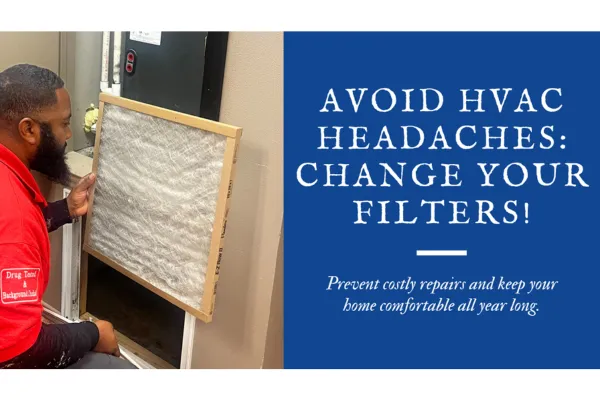
Why Changing Your HVAC Filter Could Save You Hundreds and Prevent Common Issues
Most HVAC breakdowns don’t start with a catastrophic failure. They start quietly.
A filter that hasn’t been changed.
For homeowners, renters, and property managers, HVAC filters are one of the most overlooked pieces of preventive maintenance. They’re inexpensive, easy to replace, and hidden out of sight — which is exactly why they cause so many avoidable problems.
This article breaks down the real problems and drawbacks of dirty, incorrect, or neglected HVAC filters, explains why these issues occur more frequently as the seasons change, and demonstrates how a simple quarterly habit can prevent thousands of dollars in repairs, complaints, and discomfort.
Problem #1: Reduced Airflow That Slowly Strangles Your System
The most common issue caused by a dirty HVAC filter is also the most misunderstood: restricted airflow.
When a filter becomes clogged with dust, pollen, pet hair, and debris, air can no longer move freely through the system. The HVAC unit compensates by running longer and harder to maintain the desired temperature.
Why this is a problem
Uneven temperatures throughout the home
Longer run times and higher energy bills
Increased wear on blowers and motors
For homeowners, this shows up as rooms that never feel comfortable. For renters, it feels like the system “isn’t working right.” For property managers, it leads to repeated comfort complaints — even though the equipment itself may be perfectly functional.
This is not a performance issue. It’s a maintenance issue.
Problem #2: System Strain That Leads to Early Failure
HVAC systems are designed to move a specific volume of air. When airflow is restricted, internal components operate outside their ideal range.
What happens behind the scenes
Cooling systems can freeze coils due to poor airflow
Heating systems can overheat and shut down
Motors and blowers experience excess strain
Over time, this strain shortens the lifespan of the system. Many homeowners are told their unit “just wore out,” when in reality, years of restricted airflow accelerated the failure.
For property managers, this is one of the most expensive drawbacks of inconsistent filter changes. Emergency repairs and early replacements cost far more than a box of filters ever will.
Problem #3: Poor Indoor Air Quality (Especially Noticeable for Renters)
HVAC filters are not just about protecting equipment. They also play a major role in indoor air quality.
When filters are clogged or overdue for replacement:
Dust and allergens recirculate through the home
Pet dander builds up in the system
Odors linger longer than they should
Why this matters
Allergy and asthma symptoms increase
Homes feel dusty even after cleaning
Tenants may assume the HVAC system is the problem
Renters often experience these issues first, but homeowners and property managers ultimately deal with the consequences.
Problem #4: The Drawback of Using the Wrong Filter
One of the biggest misconceptions about HVAC filters is that “more filtration is always better.”
That’s not true.
Common filter mistakes
Filters with a MERV rating too high for the system
Cheap fiberglass filters that trap very little
Incorrect filter sizes that allow air to bypass the filter entirely
Why this causes problems
Overly restrictive filters reduce airflow
Undersized or incorrect filters let debris into the system
New filters can still cause damage if they’re the wrong type
This is where many homeowners and property managers unintentionally create issues while trying to do the right thing.
Problem #5: The Costly Assumption That “Someone Else Will Handle It”
HVAC filter neglect often comes down to unclear responsibility.
How this plays out
Homeowners forget until something breaks
Renters assume it’s the landlord’s responsibility
Property managers assume tenants will change it
The result is predictable: the filter doesn’t get changed at all.
When everyone assumes someone else is handling it, the HVAC system pays the price — followed by the people responsible for repairs, replacements, and unhappy occupants.
Problem #6: Seasonal Changes Make Filter Neglect Worse
HVAC filters clog faster during seasonal transitions.
Why quarterly changes matter
Spring: pollen and allergens
Summer: extended cooling run times
Fall: debris from system transitions
Winter: heavy heating demand
Skipping filter changes during these periods increases system strain exactly when HVAC equipment is working its hardest.
Quarterly changes align naturally with how HVAC systems are used, making them one of the simplest and most effective preventive maintenance habits.
The Preventable Pattern Behind Most HVAC Filter Problems
When HVAC issues related to filters show up, they usually follow the same pattern:
Filter is forgotten or ignored
Airflow becomes restricted
System compensates by working harder
Comfort drops and costs rise
A preventable repair or failure occurs
This cycle is common, predictable, and avoidable.
A Simple Checklist to Prevent These Problems
For homeowners, renters, and property managers, consistency matters more than perfection.
Confirm the correct filter size and type
Change filters every 90 days
Replace more often during heavy-use seasons
Keep a spare filter on hand
Tie filter changes to seasonal reminders
These small steps protect one of the most expensive systems in any home or building.
Why Preventive Maintenance Beats Emergency Repairs Every Time
Most HVAC professionals would rather help customers avoid problems than fix preventable ones. Filters are one of the clearest examples of this.
Quarterly filter changes reduce breakdowns, improve comfort, protect equipment, and lower long-term costs — without complex upgrades or major investments.
If you’re unsure about the right filter type for your system, or if recurring comfort issues keep showing up, a professional inspection can identify whether airflow or filtration is contributing to the problem.
Preventive maintenance doesn’t just save money. It saves frustration, time, and unnecessary emergencies.

