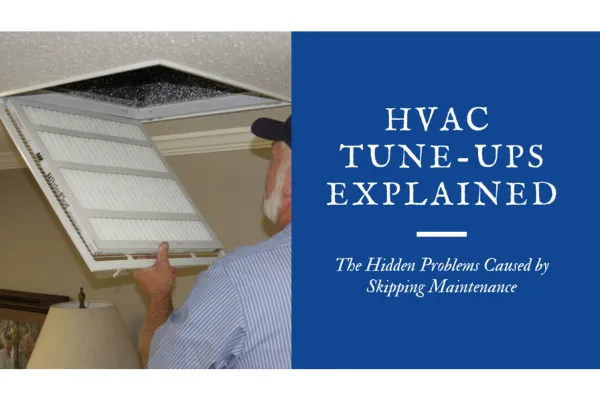
The Hidden Problems Texas Homeowners Face When Skipping HVAC Tune-Ups
It Was Working Fine… Until It Wasn’t
For many Texas homeowners, HVAC tune-ups feel optional. The system is running, the house feels comfortable, and nothing seems urgent. So maintenance gets pushed to “later.”
The problem is that HVAC systems rarely fail without warning; they fail quietly first. Small issues build over time, stress critical components, and usually surface when Texas weather is at its most extreme. That’s why breakdowns tend to happen in the middle of a 105-degree summer or during an unexpected winter freeze.
This article isn’t about fear or selling maintenance plans. It’s about helping homeowners understand the real problems that come from skipping tune-ups so that they can make informed decisions about their comfort, costs, and system lifespan.
Problem #1: Small HVAC Issues Don’t Stay Small
Most major HVAC failures start as minor, inexpensive issues that go unnoticed:
Dirty condenser or evaporator coils
Loose electrical connections
Low refrigerant levels
Restricted airflow
Worn capacitors or belts
Your system can continue heating or cooling while these issues quietly worsen. Over time, they force the system to work harder than designed, increasing wear on the most expensive components.
Without regular inspections, homeowners often don’t discover these problems until they’ve turned into costly repairs or complete system failure.
Problem #2: Higher Energy Bills With No Clear Explanation
One of the earliest signs of skipped maintenance is a gradual increase in energy bills.
When an HVAC system is out of tune:
It runs longer cycles
It struggles to reach set temperatures
It consumes more electricity or gas to do the same job
Many homeowners assume rising bills are due to utility rate changes or extreme weather. In reality, inefficient operation caused by neglected maintenance is often a major contributor.
Tune-ups don’t guarantee lower bills, but they prevent unnecessary energy waste that compounds month after month.
Problem #3: Breakdowns Happen During Extreme Texas Weather
HVAC systems are most likely to fail when they’re under the highest demand.
In Texas, that means:
Prolonged summer heat waves
Sudden winter cold snaps
Grid strain and limited service availability
When tune-ups are skipped, systems enter these seasons already stressed. That’s why many emergency calls happen during peak heat or cold, when wait times are longer and repairs are more urgent.
This is also why most professionals recommend two HVAC tune-ups per year:
Spring tune-ups to prepare for intense Texas summers
Fall tune-ups to prepare for unpredictable and increasingly harsh winters
These seasonal tune-ups aren’t arbitrary. They’re timed to catch issues before the system faces its most demanding conditions.
Problem #4: Skipping Tune-Ups Can Shorten System Lifespan
HVAC systems are designed to last 15–20 years, but that lifespan assumes routine maintenance.
Without tune-ups:
Components wear out faster
Compressors experience excessive strain
Minor inefficiencies accelerate long-term damage
The result is often premature system replacement — sometimes years earlier than expected. For homeowners, that means an unplanned expense that could have been delayed or avoided with proper care.
In some cases, skipped maintenance may also affect manufacturer warranty coverage, depending on system requirements.
Problem #5: “It’s Working Fine” Is a Misleading Signal
One of the most common misconceptions is that a working system is a healthy system.
In reality:
HVAC units can operate outside optimal performance ranges
Safety and efficiency issues aren’t visible from the thermostat
Comfort problems often appear late in the failure cycle
A system can cool or heat your home while slowly damaging itself internally. Tune-ups provide visibility into problems homeowners simply can’t see on their own.
Who HVAC Tune-Ups Are Not For
This is an important distinction.
HVAC tune-ups are not always necessary for:
Brand-new systems that have been recently installed and inspected
Units that have already undergone thorough maintenance within the past season
Homeowners planning full system replacement in the immediate future
Being honest about this builds trust. Tune-ups aren’t about servicing every system constantly — they’re about servicing the right systems at the right time.
What a Proper HVAC Tune-Up Should Actually Include
Not all tune-ups are equal. Homeowners should know the difference between real maintenance and surface-level checklists.
A proper HVAC tune-up typically includes:
Full system inspection
Electrical component testing
Airflow and temperature checks
Cleaning of critical components
Safety and performance evaluations
Clear documentation of findings
Understanding what’s involved helps homeowners ask better questions and avoid ineffective “quick visit” services.
How Tune-Ups Change Repair Conversations Later
Tune-ups don’t eliminate the need for repairs. They change how repairs happen.
With routine maintenance:
Problems are discovered earlier
Repairs can be planned instead of rushed
Homeowners have time to weigh options
Emergency decisions become less common
Instead of reacting during a crisis, homeowners gain control over timing, cost, and comfort.
Tune-Ups Aren’t About Fear, They’re About Control
Skipping HVAC tune-ups isn’t wrong. Many homeowners do it.
But understanding the risks allows you to make smarter decisions, especially in a climate like Texas, where HVAC systems work harder than almost anywhere else in the country.
For most homeowners, spring and fall tune-ups provide the best balance of protection, efficiency, and peace of mind, preparing systems for the brutal summers and unpredictable winters ahead.
The goal isn’t constant service. It’s fewer surprises, lower long-term costs, and confidence that your system is ready when you need it most.
A Simple Next Step (If and When It Makes Sense)
If you’re unsure about your system’s condition, a seasonal HVAC inspection can help you understand where things stand, without committing to repairs or long-term plans.
Many homeowners choose to schedule:
A spring inspection to confirm their system is ready for sustained summer heat
A fall inspection to ensure safe, reliable operation heading into winter
The purpose of these checkups isn’t to sell services. It’s to give you clarity, so you can decide what, if anything, needs attention before extreme weather arrives.
If you’d like to explore whether a seasonal tune-up makes sense for your home, reach out to schedule an inspection at a time that works for you. There’s no pressure, just information.
📱Call Us: 972-291-8002
💻Website: cozydair.com
📧Email: [email protected]
Related Article: How Much Does a New HVAC System Really Cost in Dallas? Comparing Goodman, Carrier, and Trane in 2025

