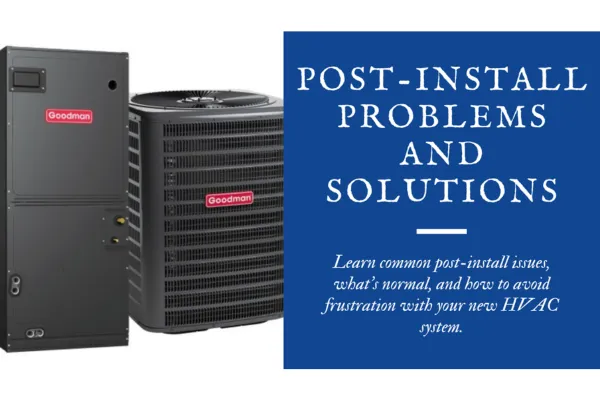
What to Expect After HVAC Installation (And How to Avoid Frustration)
A short story that almost every homeowner recognizes
The technician’s truck pulls away. The paperwork is signed. The house is finally quiet again.
For most homeowners and residential property managers, that moment brings relief. The old system was loud, unreliable, or wildly inefficient. The new HVAC system represents a fresh start.
Then a few days go by.
One room feels warmer than another. The system sounds different than expected. The thermostat isn’t behaving the way the old one did. A utility bill arrives, and it isn’t dramatically lower yet.
That’s usually when doubt creeps in.
“Is something wrong?”
In most cases, the answer is no.
What’s actually missing isn’t performance, it’s expectation-setting. The companies that do this well explain what normal looks like after installation. The ones that don’t create unnecessary anxiety, callbacks, and frustration.
This article exists to do what too many contractors skip: explain what to expect after HVAC installation, why certain issues are common, and how to avoid frustration moving forward.

Why post-install problems feel bigger than they are
A new HVAC system is one of the largest investments a homeowner or landlord makes in a property. When expectations are unclear, even minor issues feel amplified.
The reality is this: many post-install “problems” are not failures. They’re adjustments, limitations of the home, or behavior changes that weren’t discussed clearly upfront.
Let’s walk through the most common ones.
1. Comfort isn’t always perfect on day one
What people expect:
A brand-new system should instantly make every room perfectly comfortable.
What actually happens:
New systems often require fine-tuning after installation. This can include:
Airflow balancing
Minor thermostat adjustments
Acclimation to how the system cycles
Limitations caused by existing ductwork
In older homes especially, duct systems were designed for equipment that no longer exists. A modern system is more precise, which means it exposes weaknesses that were already there.
How to avoid frustration
The best contractors explain that comfort optimization is a process, not a switch. When homeowners know adjustments are normal, they don’t assume something is wrong.
2. Energy bills don’t always drop immediately
What people expect:
New system equals instant savings.
What actually happens:
Energy efficiency depends on more than the equipment:
Insulation quality
Air leaks
Thermostat settings
Usage habits
Occupancy patterns
For landlords and property managers, tenant behavior plays a major role. A high-efficiency system cannot offset doors left open, extreme thermostat settings, or inconsistent filter changes.
How to avoid frustration
Savings should be viewed over time, not one billing cycle. Companies that are upfront explain this clearly before installation, not after the first confusing utility bill.
3. Some rooms may still feel different than others
What people expect:
Every room should feel exactly the same.
What actually happens:
Uneven temperatures are one of the most common post-install complaints, and rarely caused by the new unit itself.
Common factors include:
Long duct runs
Multi-story layouts
Sun exposure differences
Older duct sizing
Lack of zoning
A new system improves performance, but it cannot redesign the home’s airflow without additional modifications.
How to avoid frustration
Clear conversations upfront about zoning limitations and airflow realities prevent disappointment later.
5. Thermostats are more complex than before
What people expect:
Set it and forget it, just like the old one.
What actually happens:
Smart thermostats and advanced controls offer more features but also require education.
Common issues include:
Incorrect scheduling
Overrides that cancel efficiency benefits
Confusion between modes
Tenants changing settings without understanding impact
How to avoid frustration
Education matters as much as installation. The most trusted companies walk homeowners and property managers through real-world usage, not just basic setup.
6. New systems still need maintenance
What people expect:
It’s new — why would it need anything?
What actually happens:
Modern HVAC systems are more sensitive. Filters, sensors, and airflow all matter more than they used to.
Neglected maintenance can cause:
Comfort issues
Efficiency loss
Premature wear
Increased service calls
How to avoid frustration
Maintenance expectations should be discussed before installation, not when problems arise.
7. The home didn’t change — only the equipment did
What people forget:
A new system doesn’t automatically fix:
Poor insulation
Leaky windows
Old ductwork
Layout challenges
When expectations don’t match reality, the system takes the blame.
How to avoid frustration
Upfront companies explain the difference between equipment performance and home performance.
When a problem is a real problem
Not every concern should be dismissed.
You should contact your HVAC provider if you experience:
System not heating or cooling at all
Unusual smells or burning odors
Loud or worsening mechanical noise
Repeated shutdowns
Error codes that don’t resolve
The difference is knowing what’s normal versus what requires attention, something education makes far easier.
Why upfront HVAC companies create better long-term outcomes
The best HVAC companies don’t just install equipment. They install confidence.
They:
Explain limitations before the job
Set realistic expectations
Prepare homeowners for adjustments
Educate rather than rush
That approach reduces callbacks, builds trust, and leads to better reviews, not because fewer issues happen, but because fewer surprises do.
Final thoughts: clarity beats perfection
No HVAC system is perfect. But frustration almost always comes from misunderstanding, not malfunction.
When homeowners and property managers know what to expect after HVAC installation, small adjustments don’t feel like failures, they feel like part of the process.
If your HVAC company is willing to explain the drawbacks, not just the benefits, that’s usually a sign you chose the right one.

