Helpful Articles
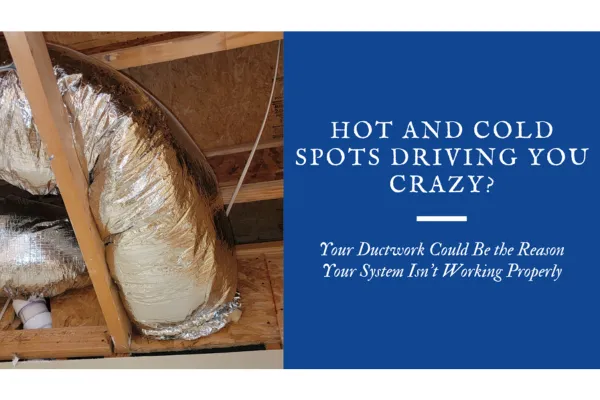
Uneven Temperatures in Your Home? Your Ductwork Might Be the Real Issue
A homeowner replaces their HVAC system, expecting everything to change.
New unit. Better efficiency. Lower bills. Perfect comfort.
But a few weeks later…
The upstairs is still hot. The living room is freezing. The energy bill barely moved.So what went wrong?
It wasn’t the system.
It was the ductwork—something no one checked, tested, or talked about.
And this happens more often than most homeowners (and even property managers) realize.
The Real Problem: Your Air Isn’t Getting Where It Needs to Go
Most people think their HVAC system is responsible for comfort.
It’s not—at least not entirely.
Your HVAC unit produces heated or cooled air.
Your ductwork delivers it.
If that delivery system is flawed, nothing else matters.
HVAC Units Don’t Distribute Air—Ducts Do
Think of your system like this:
The unit is the engine
The ductwork is the road system
You can have a powerful engine—but if the roads are broken, blocked, or poorly designed, you’ll never reach your destination efficiently.
Why Older Homes Are at Higher Risk
If your home is 10–20+ years old, there’s a high chance your ductwork has issues.
Common reasons include:
Outdated design standards
Wear and tear over time
Poor original installation
Additions or renovations that never updated the airflow
Property managers see this constantly—especially in older rental properties where comfort complaints never seem to go away.
5 Hidden Ductwork Problems That Are Costing You Comfort and Money
1. Leaky Ducts
This is one of the most common—and expensive—issues.
Conditioned air leaks into:
Attics
Crawl spaces
Walls
That means you’re paying to heat and cool areas no one lives in.
Result:
Higher utility bills
Reduced airflow to rooms
Constant system strain
2. Poor Duct Design
Not all duct systems are designed correctly.
Common problems include:
Runs that are too long
Too many sharp turns
Rooms that don’t get enough supply
Result:
Some rooms feel like a sauna, others like a freezer.
3. Blocked or Collapsed Ducts
Over time, ducts can:
Sag
Get crushed
Become obstructed
This restricts airflow like a kink in a hose.
Result:
Weak airflow
Rooms that never reach temperature
Increased system workload
4. Improper Duct Sizing
Bigger is not always better—and smaller is not always efficient.
If ducts are:
Too small → not enough air gets through
Too large → air loses pressure
Result:
Inconsistent airflow and poor system performance.
5. Lack of Proper Return Air
Most homeowners don’t realize this:
Your system needs to pull air back in just as much as it pushes it out.
Without proper return airflow:
Air gets trapped in rooms
Pressure becomes unbalanced
Result:
Doors that slam or won’t close properly
Uneven temperatures
Reduced efficiency
Why Fixing the HVAC Unit Doesn’t Solve the Problem
This is where many homeowners go wrong.
They assume:
“If something’s wrong, the unit must be the issue.”
So they replace it.
Real Scenario
A homeowner spends thousands on a new system.
For a short time, things feel better.
But soon:
The same rooms are uncomfortable
Energy bills creep back up
Frustration returns
Why?
Because the delivery system was never fixed.
Replacing the unit without addressing ductwork is like:
Installing a new engine in a car with clogged fuel lines
Upgrading Wi-Fi without fixing dead zones
The core issue remains.
The Hidden Cost of Ignoring Ductwork
Duct problems don’t just affect comfort—they impact your finances long-term.
1. Higher Energy Bills
When air is lost or poorly distributed, your system works harder to compensate.
You pay for:
Wasted air
Longer run times
2. Shorter HVAC Lifespan
Your system isn’t designed to fight against poor airflow.
Extra strain leads to:
More repairs
Earlier replacement
3. Constant Comfort Complaints
For homeowners:
Daily frustration
For property managers:
Repeated tenant complaints
Lower retention
4. Ongoing Service Costs
Without addressing ductwork, you may:
Call for service multiple times
Fix symptoms instead of the root problem
Why Most People Delay Fixing Ductwork
Even when the signs are obvious, many homeowners hesitate.
Here’s why:
“Can’t you just fix the unit?”
This is the most common misconception.
In reality:
Fixing the unit without fixing airflow is a temporary solution at best.
“This sounds expensive”
It can be an investment—but compare that to:
Years of high energy bills
Repeated repairs
Premature system replacement
Ignoring it often costs more over time.
“Let me think about it”
This usually means one thing:
The homeowner doesn’t fully understand the problem yet.
And when people don’t understand, they delay.
How Smart Homeowners and Property Managers Solve This
The solution isn’t guesswork—it’s diagnosis.
Step 1: Full Duct Inspection
A professional evaluates:
Leaks
Design flaws
Airflow issues
Step 2: Airflow Testing
This measures:
How much air each room is receiving
Where losses are happening
Step 3: Targeted Fixes
Depending on the issue:
Sealing leaks
Redesigning sections
Replacing damaged ducts
Improving return airflow
The Bottom Line: Comfort Starts with Airflow
If your home has:
Hot and cold spots
High energy bills
Weak airflow
There’s a strong chance your ductwork—not your HVAC unit—is the real problem.
And until that’s addressed, no upgrade or repair will fully solve it.
Summary
Your HVAC system produces air—ductwork delivers it
Most comfort issues are airflow-related, not unit-related
Older homes are especially vulnerable to duct problems
Ignoring ductwork leads to higher costs over time
Proper inspection and correction can dramatically improve comfort and efficiency
If you’re dealing with uneven temperatures, rising energy bills, or rooms that never feel right, it’s time to look beyond the unit.
Schedule a professional duct inspection and get a clear answer on what’s actually causing the problem—before spending money on the wrong fix. Contact our office to ensure your system is operating safely and efficiently before the peak summer heat arrives.
📱Call Us: 972-291-8002
💻Website:cozydair.com
📧Email:[email protected]
Related Article:How Much Does a New HVAC System Really Cost in Dallas? Comparing Goodman, Carrier, and Trane in 2025|The Hidden Problems Texas Homeowners Face When Skipping HVAC Tune-Ups

©Cozy-D Heating & Air Conditioning 2026. All rights reserved. | Privacy Policy | Terms of Use