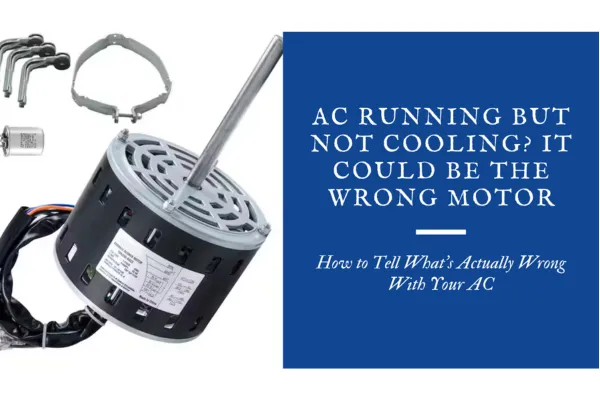
Which HVAC Motor Is the Problem? A Homeowner’s Guide to Condenser vs Blower Motors
It’s 95 degrees outside. Your AC is running. You hear it kick on.
But inside? Warm air.
At this point, most homeowners assume the worst:
“The compressor is gone”
“We need a whole new system”
“This is going to be expensive”
But in a surprising number of cases, the issue isn’t the entire system—it’s just a motor.
And not just any motor. Usually one of two:
The condenser fan motor (outside unit)
The blower motor (inside unit)
Understanding the difference between these two can save you:
Thousands in unnecessary replacements
Time diagnosing the wrong issue
Frustration when your system “seems fine” but isn’t working
By the end of this guide, you’ll know exactly:
What each HVAC motor does
How to tell which one might be failing
When to repair vs replace
The 3 Main HVAC Motors Explained (Simple Breakdown)
Most residential HVAC systems rely on multiple motors working together, not just one.
Condenser Fan Motor (Outside Unit)
Location: Outside AC unit
Job: Pulls air through the condenser coil to release heat
When your system is cooling your home, heat has to go somewhere. The condenser motor helps push that heat out.
Common Signs It’s Failing:
AC is running but blowing warm air
Outdoor fan is not spinning
You hear a humming sound, but no movement
Unit overheats and shuts off
Why It Matters:
If this motor stops, heat gets trapped. That means your AC can’t cool—no matter how well everything else is working.
Blower Motor (Inside Unit)
Location: Inside (air handler or furnace)
Job: Pushes cooled air through your ducts and into your home
This is the motor responsible for airflow.
Common Signs It’s Failing:
Weak airflow from vents
No air coming out at all
Some rooms hotter than others
System turns on, but comfort doesn’t change
Why It Matters:
Even if your AC is cooling properly, without the blower motor, that cool air never reaches you.
Compressor Motor (Quick Clarification)
While not the focus here, many homeowners confuse motor issues with compressor problems.
Important:
If your compressor fails, that’s typically a much larger repair. But many symptoms people associate with “compressor failure” are actually motor-related.
PSC vs ECM Motors: The Hidden Cost Factor
Not all motors are built the same. This is where many homeowners get surprised.
What Is a PSC Motor?
Permanent Split Capacitor (PSC) motors are:
Older technology
Single-speed
Less expensive
Pros:
Lower upfront cost
Easier and cheaper to replace
Cons:
Less energy efficient
More wear over time
What Is an ECM Motor?
Electronically Commutated Motor (ECM) is newer technology:
Pros:
Variable speed (adjusts airflow automatically)
Much more energy efficient
Better comfort control
Cons:
Higher upfront cost
More expensive repairs
Which One Do You Have?
Older systems (10–15+ years): likely PSC
Newer or high-efficiency systems: likely ECM
Why This Matters:
Two homeowners with the same “blower motor problem” could get completely different quotes—simply because of motor type.
Which HVAC Motor Fails Most Often?
In residential systems, here’s what we typically see:
Most Common: Condenser Fan Motor
Constant exposure to heat and weather
Works hardest during peak summer
Often the first to fail in extreme climates
Close Second: Blower Motor
Affected by dust, airflow restrictions, and age
Can last longer—but failure impacts comfort more noticeably
How to Know Which Motor Is the Problem
You don’t need to be a technician—but you should know how to read the signs.
If Your AC Is Running but Not Cooling:
Go outside
Check if the fan is spinning
Not spinning?
→ Likely condenser fan motor
If There’s Little or No Airflow Indoors:
System turns on
But vents are weak or empty
→ Likely blower motor
If Everything Seems “On” but Nothing Works:
Could be capacitor
Could be electrical
Could still be a motor
What You Can Safely Check:
Thermostat settings
Air filter (dirty filters strain blower motors)
Outdoor unit fan movement
When to Call a Professional
If the fan isn’t spinning
If you hear humming or buzzing
If airflow suddenly drops
Important:
The goal isn’t to diagnose your system perfectly—it’s to understand enough to ask the right questions and avoid unnecessary repairs.
When It’s NOT the Motor
This is where many homeowners—and even inexperienced techs—get it wrong.
Common Alternatives:
1. Capacitor Failure
Often cheaper fix
Can mimic motor failure
2. Thermostat Issues
Incorrect signals to system
3. Electrical Problems
Wiring or breaker issues
Why This Matters
Misdiagnosing a capacitor as a motor can cost hundreds more than necessary.
A good technician will always:
Test components
Confirm failure
Explain the difference
Summary: What Homeowners Should Remember
Your HVAC system has multiple motors, not just one
The two most important:
Condenser motor (outside)
Blower motor (inside)
Symptoms tell you a lot:
Warm air → likely condenser issue
Weak airflow → likely blower issue
PSC vs ECM motors can significantly impact cost
Not every issue is a motor—proper diagnosis matters
Need help diagnosing your AC problem or scheduling a seasonal tune-up?
Contact our office to ensure your system is operating safely and efficiently before the peak summer heat arrives.
📱Call Us: 972-291-8002
💻Website:cozydair.com
📧Email:[email protected]
Related Article: How Much Does a New HVAC System Really Cost in Dallas? Comparing Goodman, Carrier, and Trane in 2025 |7 Common HVAC Parts That Fail (and What It Could Cost You If You Wait)

