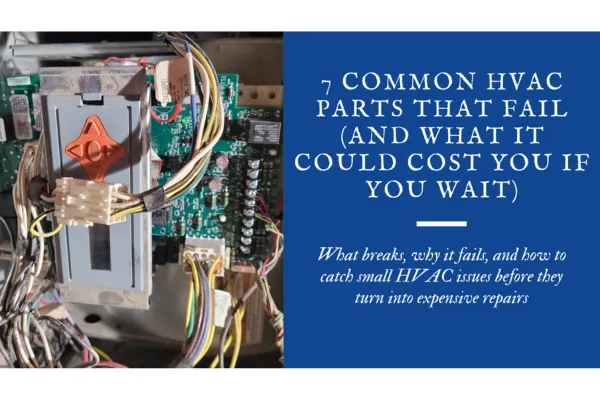
7 Common HVAC Parts That Fail (and What It Could Cost You If You Wait)
The $200 Problem That Turned Into $2,000
Last summer, a homeowner called Cozy D after their AC stopped working completely.
But here’s the part that mattered:
It didn’t stop suddenly.For days, the system had been:
Blowing slightly warm air
Taking longer to cool
Making a faint clicking noise
They waited.
By the time we arrived, the issue wasn’t just a small electrical part anymore—it had stressed the compressor.
What could have been a $200 repair turned into a multi-thousand-dollar problem.
And this is what most homeowners and property managers don’t realize:
HVAC systems don’t usually fail all at once.
They fail one part at a time.
Why HVAC Systems Fail (It’s Not What You Think)
When people think their system is “broken,” they assume the worst:
“Do I need a whole new unit?”
In reality, most service calls come down to specific components wearing out.
Think of your HVAC system like a chain:
One weak link breaks
The rest of the system feels the strain
If caught early, it’s a simple fix.
If ignored, it spreads.
The 7 Most Common HVAC Parts That Go Out
1. Capacitor (The Most Common Failure)
What it does:
Starts and powers motors in your system
Why it fails:
Heat exposure (especially in Texas summers)
Electrical wear over time
Warning signs:
AC won’t turn on
Clicking sounds
Warm air blowing
If ignored:
It can overwork and damage your compressor
Typical repair range:
Lower-cost fix if caught early
2. Contactor
What it does:
Controls the flow of electricity to components
Why it fails:
Pitting from electrical arcing
Dirt and debris buildup
Warning signs:
AC turns on and off rapidly
System won’t stay running
If ignored:
Can cause system short cycling and wear out other parts
3. Blower Motor
What it does:
Pushes air through your home
Why it fails:
Overheating
Lack of maintenance
Age
Warning signs:
Weak airflow
Strange noises
Uneven cooling
If ignored:
Comfort drops fast—and strain increases across the system
4. Compressor (The Expensive One)
What it does:
Circulates refrigerant and removes heat
Why it fails:
Stress from other failing parts
Low refrigerant
Electrical issues
Warning signs:
Loud noises
System not cooling at all
If ignored:
This is where small problems become major expenses
5. Thermostat
What it does:
Controls the entire system
Why it fails:
Calibration issues
Wiring problems
Battery failure
Warning signs:
Incorrect temperature readings
System not responding
If ignored:
You may fix the wrong problem entirely
6. Refrigerant Leaks
What it does:
Allows heat transfer
Why it fails:
Coil corrosion
Wear over time
Warning signs:
AC blowing warm air
Ice on coils
Longer cooling cycles
If ignored:
Leads to compressor failure (the big one)
7. Evaporator Coil
What it does:
Absorbs heat from inside your home
Why it fails:
Dirt buildup
Corrosion
Poor airflow
Warning signs:
Reduced cooling
Ice buildup
Higher energy bills
If ignored:
System efficiency drops—and damage compounds
Why Small HVAC Problems Turn Into Expensive Repairs
Here’s the truth most companies won’t explain clearly:
Parts don’t fail in isolation.
When one component struggles:
Others compensate
Energy usage increases
Wear accelerates
This creates a domino effect.
That capacitor?
It’s not just a capacitor.
It’s:
→ Extra strain on your compressor
→ Longer run times
→ Higher utility bills
→ Bigger repair later
When Should You Repair vs Replace?
This is where most homeowners feel stuck.
Repair makes sense when:
The issue is isolated
The system is under 10–12 years old
Costs are relatively low
Replacement may be better when:
Multiple parts are failing
Repairs are becoming frequent
Efficiency has dropped significantly
At Cozy D, we walk you through both options clearly—because the goal isn’t just fixing today’s problem.
It’s helping you avoid tomorrow’s.
Why Most HVAC Problems Get Worse (And How to Prevent It)
Here’s what typically happens:
Small issue starts
Homeowner delays
System compensates
Bigger component fails
Emergency call happens
What’s missing?
Follow-up and timing.
The 3 Biggest Questions We Hear (And Straight Answers)
“Why is it so expensive for such a small part?”
Because you’re not just paying for the part.
You’re paying for:
Diagnosis
Labor
Preventing bigger system damage
The part may be small.
The impact is not.
“Do I really need to fix this right now?”
Sometimes no.
But often:
Waiting turns a minor issue into a major one
Costs increase significantly
System lifespan decreases
We’ll always tell you honestly which situation you’re in.
“Is this going to keep happening?”
Depends on the part.
Capacitors? Normal wear
Compressors? Usually a symptom of deeper issues
Our job is to fix the problem—and explain the why behind it.
The Bottom Line
Most HVAC breakdowns aren’t random.
They’re predictable.
They’re preventable.
And they usually start small.
The difference between a simple repair and a major expense often comes down to one thing:
Timing.
Need help diagnosing your AC problem or scheduling a seasonal tune-up?
Contact our office to ensure your system is operating safely and efficiently before the peak summer heat arrives.
📱Call Us: 972-291-8002
💻Website:cozydair.com
📧Email:[email protected]
Related Article: How Much Does a New HVAC System Really Cost in Dallas? Comparing Goodman, Carrier, and Trane in 2025|The Hidden Problems Texas Homeowners Face When Skipping HVAC Tune-Ups

