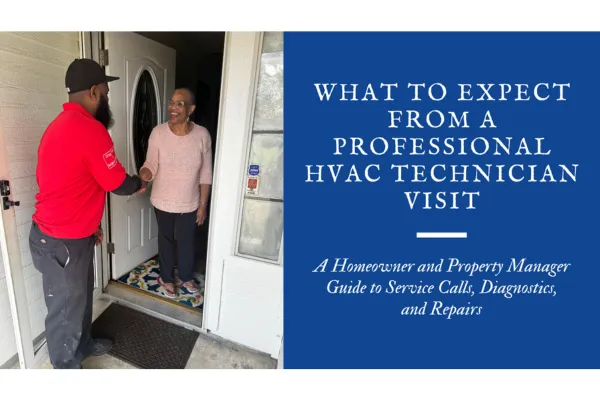
What to Expect From a Professional HVAC Technician Visit
Introduction: Why HVAC Service Visits Feel Uncertain
Most people don’t think about their HVAC system until something stops working.
The AC shuts off during a hot afternoon. A tenant reports uneven heating between rooms. The thermostat starts behaving unpredictably. At that moment, you’re not just scheduling a service call—you’re trying to regain control of your environment.
And that’s where uncertainty begins.
For many homeowners and property managers, an HVAC technician visit feels like a “black box”:
What are they going to do first?
How long will it take?
Will it turn into an expensive repair?
Is this something simple—or a major failure?
The reality is that a professional HVAC visit follows a structured, predictable process. When done correctly, it reduces stress, prevents unnecessary repairs, and gives you clarity on the condition of your system.
This guide breaks down exactly what to expect so you can walk into a service appointment informed, prepared, and confident.
The Arrival: How a Professional Visit Begins
A professional HVAC technician visit starts long before tools come out.
Initial Check-In and Identification
A technician should:
Arrive within the scheduled window
Identify themselves and their company
Confirm the service request details
Respect property access rules (especially important for property managers and tenant-occupied units)
The First Conversation Matters
Before touching the system, a good technician will ask questions like:
What symptoms are you noticing?
When did the issue start?
Is the problem constant or intermittent?
Has anything recently changed (filter, thermostat, renovations)?
This step is critical. It often narrows down potential causes before diagnostics even begin.
For property managers, this step may also include reviewing prior service history across units or systems.
The Diagnostic Process: What Is Actually Being Checked
Most HVAC visits are diagnostic first, repair second.
A professional technician will typically evaluate:
Airflow and Distribution
Air coming from vents
Blockages or restrictions
Filter condition
Duct performance indicators
Electrical Components
Wiring connections
Capacitors and relays
System voltage readings
Refrigerant System (for cooling issues)
Pressure levels
Leak indicators
Coil performance
Thermostat Functionality
Calibration accuracy
Communication with system
Battery or wiring issues
Safety Checks
Carbon monoxide risk indicators (where applicable)
Overheating components
Electrical safety hazards
This is not a rushed step. Accurate diagnosis is what prevents repeat service calls and unnecessary replacement of parts.
Communication: The Difference Between Good and Great Technicians
One of the biggest frustrations customers have is not the problem itself—it’s not understanding the problem.
A professional technician should translate technical findings into clear language.
You should expect:
A plain-English explanation of what is wrong
Visual proof when possible (photos, meter readings, or live demonstration)
A breakdown of repair options if needed
Honest guidance on urgency (fix now vs monitor vs plan ahead)
If you are a property manager, this often includes documentation you can share with ownership or tenants.
Clarity is a core part of professionalism.
Approval Before Repair: What Should Happen Next
Once the issue is identified, nothing major should proceed without your approval.
A standard process includes:
Explanation of the issue
Recommended solution
Estimated cost
Expected timeline for repair
Only after agreement does repair work begin.
This step protects both homeowners and property managers from surprise billing and ensures transparency in decision-making.
The Repair Phase: What Work Actually Looks Like
If a repair is needed, the technician will:
Replace or repair faulty components
Test system response after changes
Verify airflow, cooling, or heating restoration
Ensure system stability before leaving
Depending on the issue, repairs can range from simple fixes (capacitors, filters) to more complex system adjustments.
A good technician does not just “fix and leave”—they confirm the system is operating correctly after the repair.
Final Testing and Walkthrough
Before the visit ends, a professional technician will:
Re-test system performance
Confirm temperature output or airflow
Check thermostat response
Ensure no safety issues remain
They should also walk you through:
What was done
Why the issue occurred
What to watch for in the future
For property managers, this often includes service notes for maintenance records and tenant communication.
Common Misunderstandings About HVAC Visits
“They will fix everything in one visit”
Not always. Some issues require parts or follow-up appointments.
“A quick visit means a simple problem”
Speed does not always equal accuracy. Proper diagnostics take time.
“If it’s working again, the problem is gone”
Sometimes symptoms return if root causes are not fully addressed.
“All technicians follow the same process”
Quality varies significantly between companies. Structure and communication are key indicators of professionalism.
How Homeowners and Property Managers Can Prepare
To make the visit smoother:
Write down system symptoms before the technician arrives
Note timing and frequency of issues
Clear access to indoor and outdoor units
Ensure tenants (if applicable) know about the appointment
Keep past service records available if possible
Preparation helps technicians diagnose faster and more accurately.
Why This Process Matters
A professional HVAC visit is not just about fixing equipment—it’s about restoring comfort, safety, and predictability.
For homeowners, it means confidence that their home environment is stable.
For property managers, it means fewer repeat service calls, clearer documentation, and better tenant satisfaction.
The more structured the visit, the fewer surprises you face later.
Summary
A professional HVAC technician visit should follow a clear, repeatable structure:
Arrival and initial questions
System diagnostics
Clear explanation of findings
Approval before repairs
Repair and system testing
Final walkthrough and documentation
When this process is followed, HVAC service becomes predictable, transparent, and far less stressful.
Need help diagnosing your AC problem or scheduling a seasonal tune-up?
Contact our office to ensure your system is operating safely and efficiently before the peak summer heat arrives.
📱Call Us: 972-291-8002
💻Website:cozydair.com
📧Email:[email protected]
Related Article: How Much Does a New HVAC System Really Cost in Dallas? Comparing Goodman, Carrier, and Trane in 2025|7 Common HVAC Parts That Fail (and What It Could Cost You If You Wait)

